Premium Deep Matte Surfaces
Deep matte where the constraint is not how far gloss drops, but whether the surface stays fine, even and scratch-tolerant.
Typical working window for this solution — verify against your own gloss standard
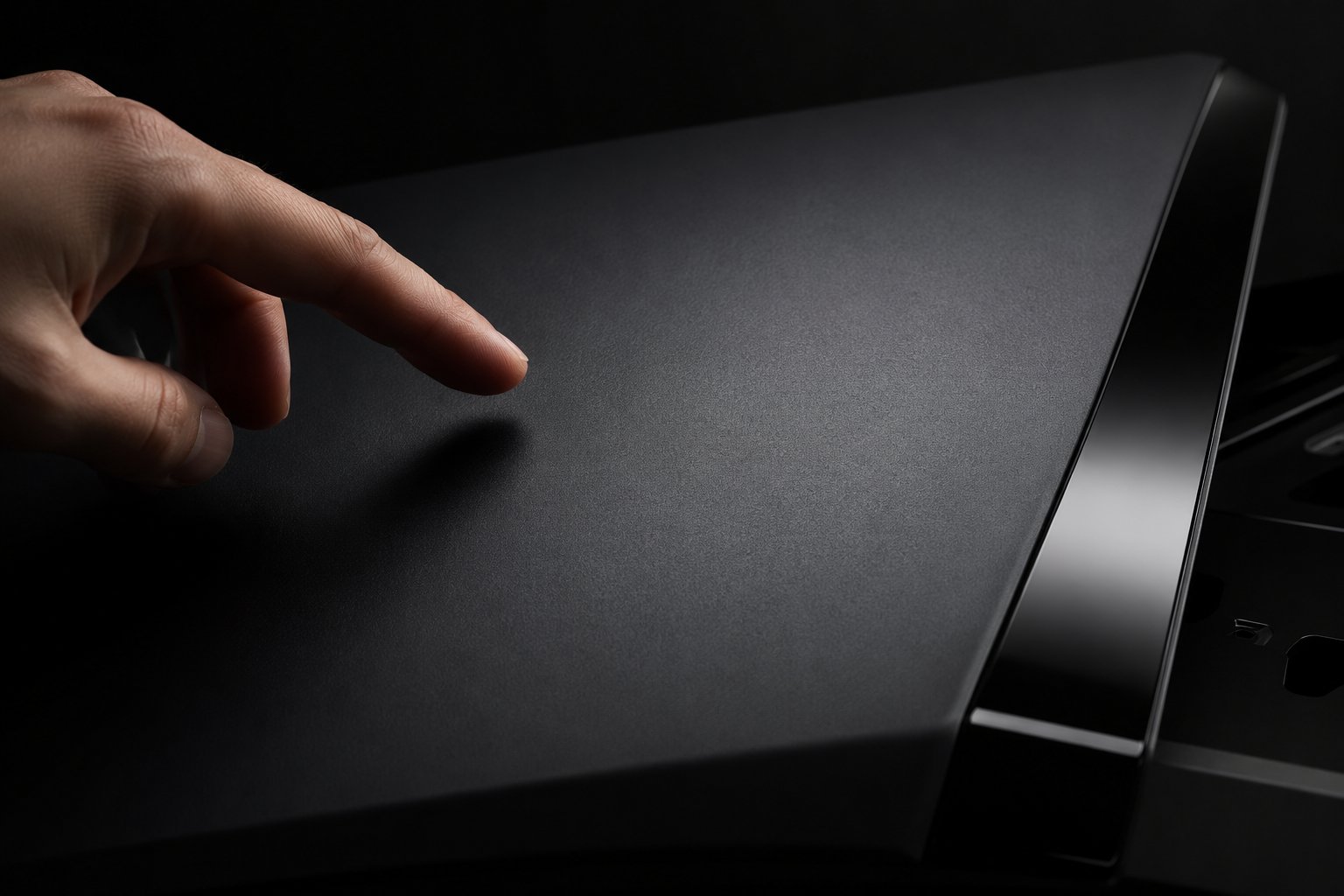
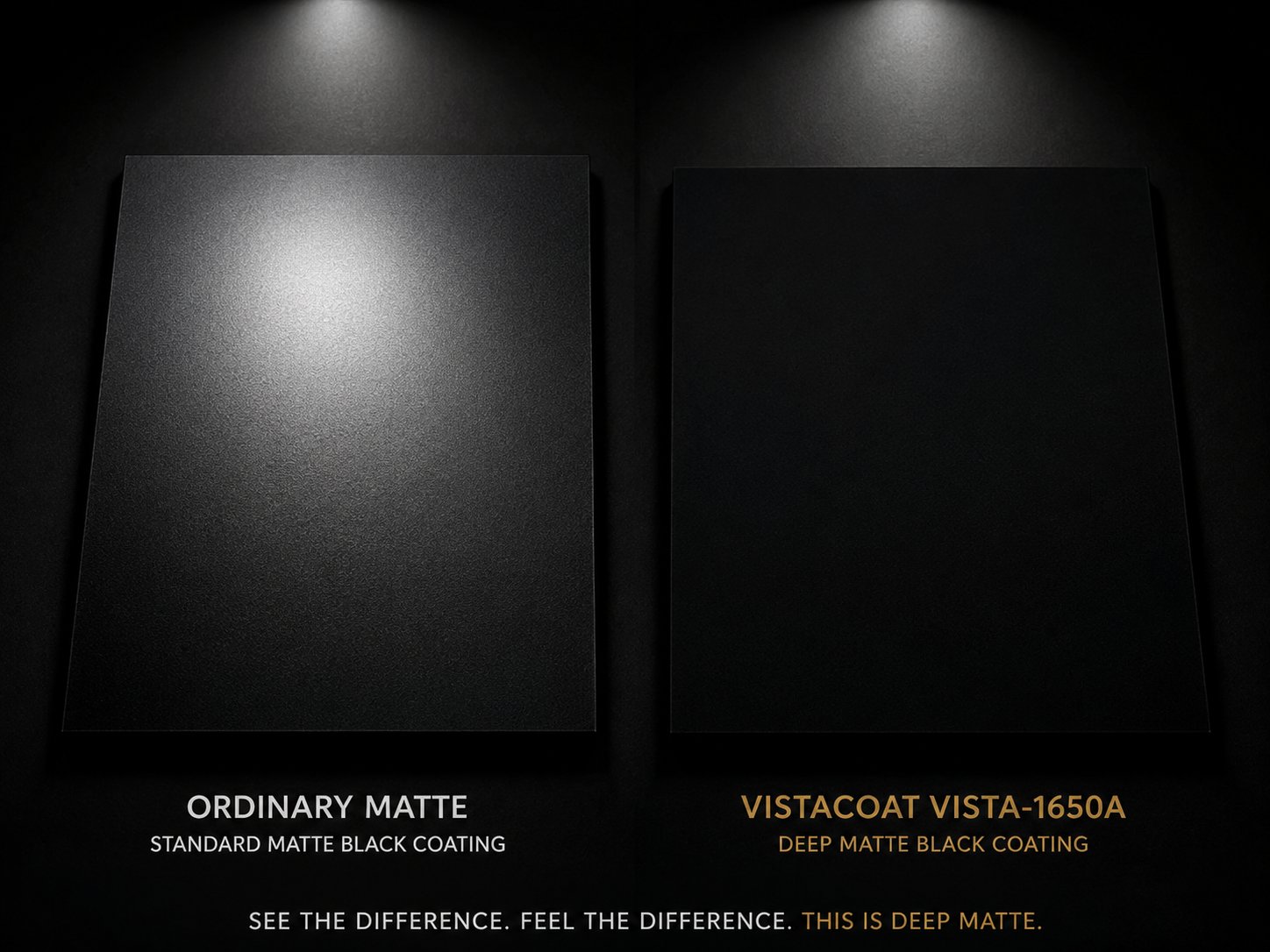
Deep matte matting covers 3 synthetic amorphous silica grades (CAS 7631-86-9) for premium deep matte finishes below 10 GU. Particle size D50 across the range runs 6.2–9 µm, with BET surface area 95–115 m²/g and oil absorption 140–165 g/100 g. SiO₂ content is 96–96.2 %. Grades in this range: VS1650A, VS361C, VS3851. Typical dosage is set by screening in your own system — set the grade first from clarity and texture constraints, then find the loading that meets your gloss target.
Where it applies
- Premium waterborne plastic coatings
- Low-reflectance furniture and cabinetry
- Consumer electronics and interior trim
What the solution is built around
Deep matte where the constraint is not how far gloss drops, but whether the surface stays fine, even and scratch-tolerant. The screening logic starts from the coating system rather than from a single matting figure — resin type, target gloss, application method and the specific problem you are seeing all change which grade should lead.
Recommended grade structure
Each project starts with a lead grade and at least one comparison grade. Running both against your own control in the first round answers more than running one grade twice.
| Grade | Role | Particle size (µm) | Application note |
|---|---|---|---|
| VS1650A | Lead | 6.2–6.5 | Primary deep matte route for first screening. |
| VS361C | Balance | 5.9–6.2 | Balances matting depth against surface refinement. |
| VS3851 | Reserve | 8.5–9.0 | Introduced only where a demanding low-gloss target is defined. |
What to measure in the first round
These are the dimensions that decide whether a grade progresses. Test against your own control sample under production-representative conditions wherever possible.
| Dimension | What good looks like |
|---|---|
| Matting depth | Reaches the defined low-gloss target |
| Surface uniformity | No seeding, mottling, roughness or chalk |
| Tactile quality | Fine and soft; free of drag or powdery feel |
| Scratch & mar | No white marking or surface damage after abrasion |
| Process stability | Dispersion, defoaming and storage remain controlled |
Technical support on this solution
- System review — resin type, target gloss, application method, current issue and incumbent product.
- Two-sample proposal — a lead grade plus a comparison route, with the reasoning for each.
- Lab and scale-up — comparison across appearance, process behaviour and storage stability.
- Troubleshooting — support on haze, drag, thickening, settling and appearance defects.
Tell us the resin system, the gloss target and standard you measure against, the application method and film build, and what is going wrong today. That turns a sample request into a screening plan with a defined answer.
Screening starts with the system
Resin, target gloss, application method, current problem. We reply with a plan.
Selecting and screening for this system
Which grade should lead a first screening round for deep matte finishes?
VS361C is the usual starting point for deep matte finishes, at a recommended dosage of 2-5 % on total formulation. Run at least one comparison grade in the same round rather than running VS361C twice — VS1650A, VS3851 cover the rest of the working range for this system. Testing two grades against your own control in round one answers more than testing one grade in two rounds.
How do the grades in this range differ?
Particle size across this range runs VS1650A at 6.2-6.5 µm; VS361C at 6.2-6.5 µm; VS3851 at 8.5-9.0 µm. The finer end (VS1650A) scatters less light inside the film and generally preserves more clarity; the coarser end (VS3851) creates more surface texture per unit added and reaches a lower gloss at lower loading. Structure differs too: VS361C carries the highest surface area in this group at 115 m²/g against 95 m²/g for VS3851, which means it thickens the formulation more at the same loading.
What dosage should I start with?
For deep matte finishes, VS361C typically starts at 2-5 % on total formulation. Treat this as a bracket rather than a target: screen three loadings around it and interpolate to your gloss reading. Set the grade first based on clarity and texture constraints, then find the loading that hits gloss — starting from a fixed loading and searching for a grade usually produces something that meets gloss and fails elsewhere.
My gloss is right but the finish has another problem. What do I change?
For deep matte finishes, the common issue is reaching very low gloss without clouding the film. Gloss is the easy variable — it is corrected by adjusting loading. What loading cannot correct is clarity, surface texture and dispersion stability, and those are set by the grade. If the current grade meets gloss but fails on one of those, move along the particle size range rather than changing the loading: finer toward VS1650A for clarity, coarser toward VS3851 for matting efficiency at lower loading.
How should I compare a Vistamatt grade against my current control?
Compare at matched gloss, not at matched loading. Different grades have different matting efficiency, so running a candidate at the incumbent's loading gives a different gloss reading — that tells you about efficiency, which is easily corrected, and nothing about the properties that are not. Find the loading that matches your gloss target first, then compare clarity over your darkest substrate, surface texture by hand, and wet formulation viscosity at that loading.
What do I get with a sample request, and what are the commercial terms?
Samples are free, 200–500 g, with freight prepaid by Vistamatt, and ship in 7–10 working days with a screening plan matched to your system. MOQ is 500 kg per grade for standard grades and 2,000 kg for a custom batch; production lead time is 15–25 days, FOB Xiamen or CIF. Documentation includes a TDS per grade, a generic SDS covering the range, a TSCA compliance declaration, and a COA per batch on request.